Linking Casino Review Metrics to Long-Term Engagement in Live Dealer Mobile Sessions
Katja Washington · Oct 10, 2026

Linking Casino Review Metrics to Long-Term Engagement in Live Dealer Mobile Sessions
Review metrics from player feedback systems often connect directly to retention patterns in live dealer mobile sessions, and data collected across multiple platforms shows consistent relationships between ratings, comment sentiment, and session duration over extended periods. Operators track these indicators because higher average scores on elements such as dealer interaction quality and stream stability tend to align with repeated logins and longer average play times in real-money environments.
Review Metrics That Matter Most
Star ratings, written comments, and frequency of feedback submissions form the core set of review metrics used by analysts, while sentiment analysis applied to text comments breaks down mentions of specific features like video latency or dealer professionalism. Studies tracking these elements reveal that platforms maintaining average ratings above 4.2 stars experience measurable increases in monthly active users for live dealer products, and the pattern holds across both iOS and Android distributions according to aggregated industry datasets released in October 2026.
Textual feedback frequently highlights technical performance and human elements together, so comments praising responsive interfaces alongside friendly dealer exchanges correlate with higher return rates within seven days of the initial session. Researchers examining large datasets note that negative mentions of connection drops produce sharper drops in subsequent engagement compared to complaints about game rules, which suggests the technical layer of mobile delivery carries heavier weight in long-term behavior.
Live Dealer Sessions on Mobile Devices
Live dealer mobile sessions combine real-time video feeds with touch-optimized betting controls, and these sessions typically last between eight and twenty-two minutes on average depending on game type and connection quality. Mobile-specific factors such as battery usage during extended streams and screen orientation handling influence whether players complete a full shoe in blackjack or move to another table, while operators monitor these variables through backend telemetry that links directly to review submissions.
Key Performance Indicators in Mobile Live Play
- Average session length measured in minutes per login
- Return frequency within thirty days of first play
- Table switch rate during single sessions
- Device-specific drop-off points reported in reviews
Platforms that adjust stream resolution dynamically based on network conditions receive fewer complaints about lag, and those adjustments show up in review language as positive references to smooth gameplay. Data from regulatory filings in multiple jurisdictions indicates that operators publishing monthly performance summaries in October 2026 documented stronger retention curves when review volumes remained steady and average scores stayed above platform benchmarks.
Connecting Metrics to Retention Patterns
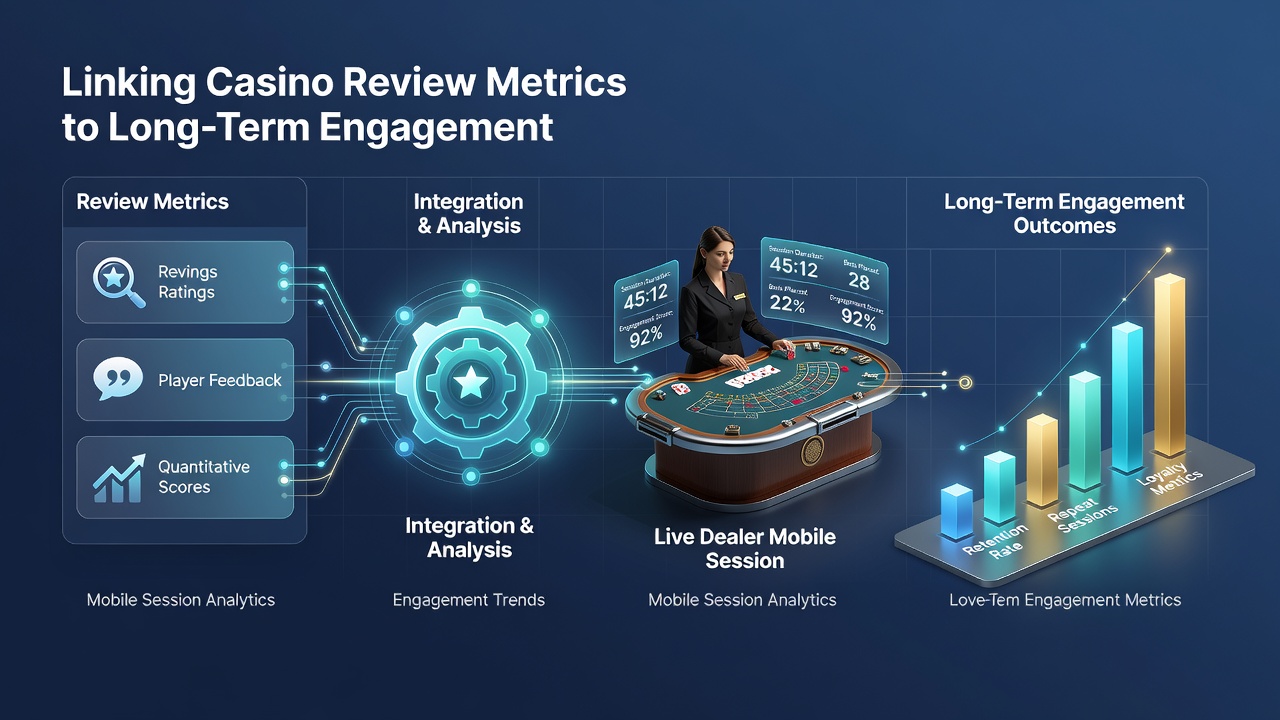
Statistical models applied to combined review and telemetry datasets demonstrate that a one-point increase in average dealer rating associates with a measurable extension in lifetime sessions, while improvements in perceived fairness comments link to reduced churn after the first month. Analysts at research institutions have mapped these relationships using regression techniques that control for variables such as bonus offers and game variety, and the resulting coefficients appear consistently across different operator portfolios.
Review volume itself functions as an engagement signal, because users who submit multiple reviews over time display higher cumulative play minutes than those who never leave feedback. Platforms that respond publicly to comments, whether addressing technical issues or acknowledging praise, often see follow-up reviews that reference the interaction, and those secondary comments frequently contain renewed positive sentiment that feeds back into overall score stability.
Regional Data Sources and Trends
Reports from the Nevada Gaming Control Board track mobile live dealer performance separately from slot activity, and these filings include aggregated player behavior metrics that align with review trends observed on third-party aggregator sites. Parallel data from the Victorian Commission for Gambling and Liquor Regulation in Australia shows comparable patterns in markets where live dealer mobile products have operated under regulated conditions for several years.
Academic papers examining European markets further support the link between review sentiment clusters and extended play intervals, with one study focusing on multi-device switching behavior finding that players who rate mobile streams highly tend to maintain activity across both phone and tablet sessions without significant drop-off. Observers note that these cross-device continuations appear more frequently when initial mobile reviews mention reliable handoff between devices.
Practical Applications for Operators
Operators integrate review monitoring into product development cycles by prioritizing fixes for issues mentioned repeatedly in feedback, such as audio sync problems or dealer response delays, and subsequent review cycles then reflect whether those changes improved player perception. Teams that close the loop between identified pain points and visible updates often record corresponding lifts in both average session length and the percentage of players returning after thirty days.
Segmentation of review data by device model and operating system version allows targeted optimizations, and these granular adjustments produce stronger correlations with retention in specific user cohorts. When platforms publish transparency reports that include review-driven changes, players sometimes reference those updates in later comments, creating a documented feedback loop that analysts can measure over successive quarters.
Conclusion
Review metrics serve as observable proxies for underlying engagement drivers in live dealer mobile environments, and the statistical relationships documented across regulatory reports and academic analyses provide operators with actionable signals for sustaining long-term player activity. Continued collection of both quantitative ratings and qualitative comments, combined with session telemetry, enables precise mapping of which platform elements most strongly influence return behavior across different markets and device types.